I gave my AI agents a spaceship
August 2026 · from the workshop
@djangelic My AI agents don’t live in chat windows anymore. Each one gets a room, and the room holds the job: my books, my inbox, my clients’ sites, my house. The agent walks in, reads that room’s own docs, and works whatever is sitting in the queue. I never start it. I never paste context again. Then I skinned the whole thing as FTL, because that is already the game I play about managing a crew. Watch it break at the end. That is the honest state of it. Full write up in bio 🚀
♬ original sound - Djangelic
For about a year now I’ve been running a lot of AI agents at once. Not one chatbot. A dozen different jobs, all going at the same time. And every single morning it was the same ritual: open a terminal, start an agent, paste in the context, explain what I wanted, wait. Then open another window and do it again. Then again.
A chat window is a great interface for one conversation. It is a terrible interface for running a crew. There’s no where. Everything lives in a scrollback you have to reconstruct from memory, and the second you close it, whatever you built up is gone.
So I stopped thinking about conversations and started thinking about rooms.
A room is a place with a standing job. My books are a room. My inbox is a room. My clients’ websites are a room. My house is a room: the lights, the sensors, the backups. Each one has its own folder, its own documentation, its own queue of work sitting in it.
The agent doesn’t get started. The agent lives there. It walks into the room, reads the room’s own paperwork, picks up whatever I dropped in the queue, and gets to work. I don’t re-explain anything. I don’t paste context. The room remembers, so I don’t have to.
That was the idea. Then the idea needed a face.
I’ve been playing FTL: Faster Than Light for years. It’s a game about exactly one skill: you have a ship, you have more systems than you have crew, and you have to decide who is standing where when things start going wrong. Which is, I realized somewhere around midnight, the precise problem I had been failing to solve in a text box.
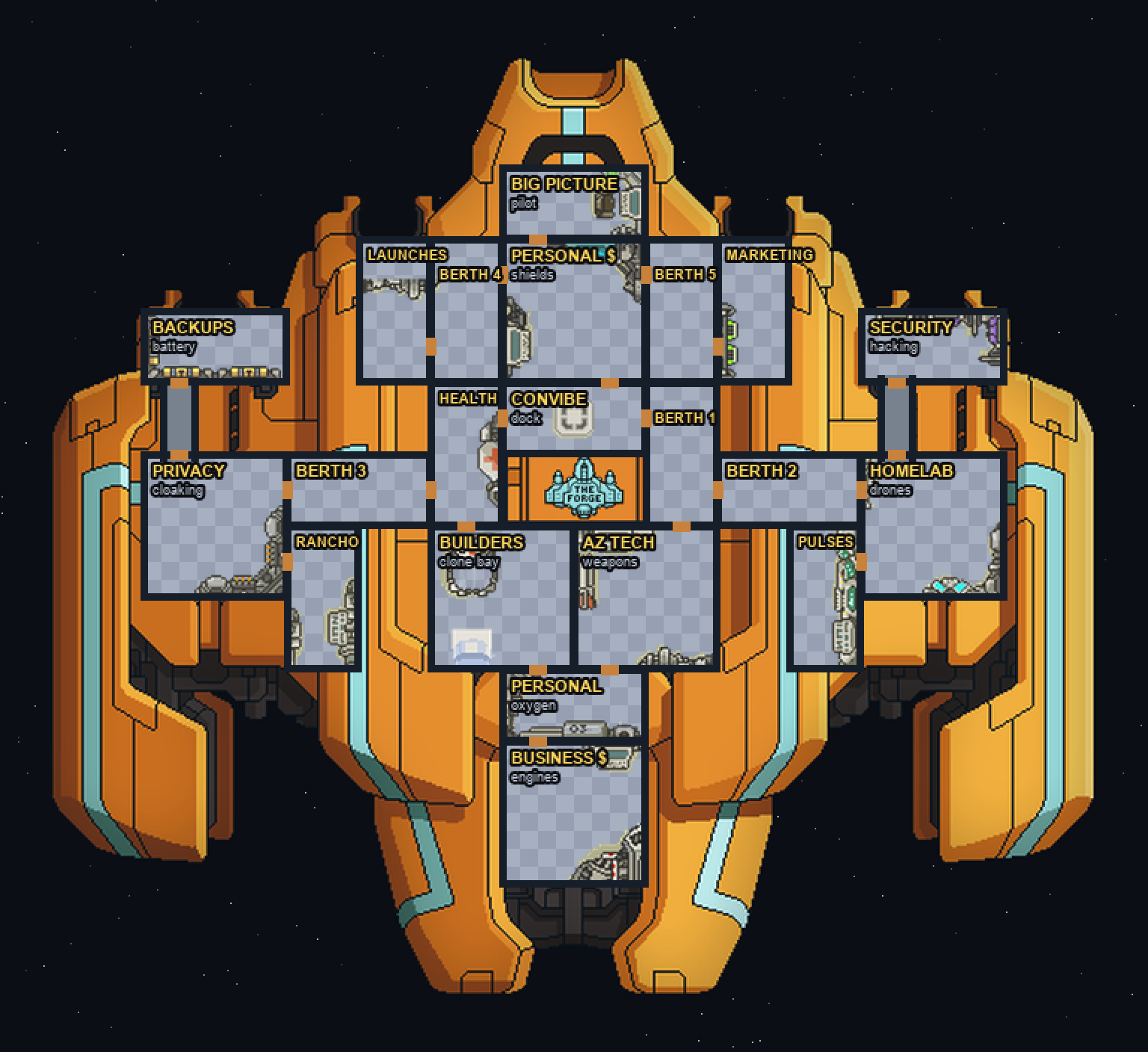
So I pointed a coding agent at the Windows machine in the other room that has my copy of the game on it, had it pull the art out of the game files, and rebuild my office as a ship.
Every room on that deck is a real job. BIG PICTURE is the captain’s chair. BUSINESS $ and PERSONAL $ are two different sets of books that should never touch each other. SECURITY, BACKUPS, MARKETING etc. When somebody is working, I can see them standing in the room, doing the work.
It is not a dashboard. I have had dashboards. A dashboard tells you a number. This tells me where everybody is, which turned out to be the thing I actually needed to know.
Does it break? Constantly. In the video, the doors stop working halfway through and I end up repairing the ship live while filming a video about the ship. That’s the honest state of it. It’s a machine, it’s not perfect, it’s watched, and it gets better.
Two things, if you want them
If you like building things yourself: the harness underneath all this is free, open source, and I didn’t write it. It’s called Munder Difflin, it’s MIT-licensed, and it is genuinely good. Go take it. The spaceship is only a theme I built on top.
The FTL art itself stays on my machine. That came out of a game I own, for my own use, and it isn’t mine to hand out. But the theming system is right there. Build your own skin.
If you run a business and the thing you recognized in this post was “I am the bottleneck for eleven different jobs at once,” that’s the part I’m turning into something you can rent. One desk, one job, month to month, priced against what a hire costs instead of what software costs.
It isn’t open yet. A handful of clients are living on it first, because I would rather find the broken doors on my own ship than on yours.
Tell me when the desks open
One email when it is ready. Not a sequence, not a countdown.
One email when it’s ready. Not a sequence, not a countdown. Prefer to just talk to a person? I hold open office hours Wednesdays and Thursdays, 11am to 3pm Arizona: no pitch, no catch.