The King Returns
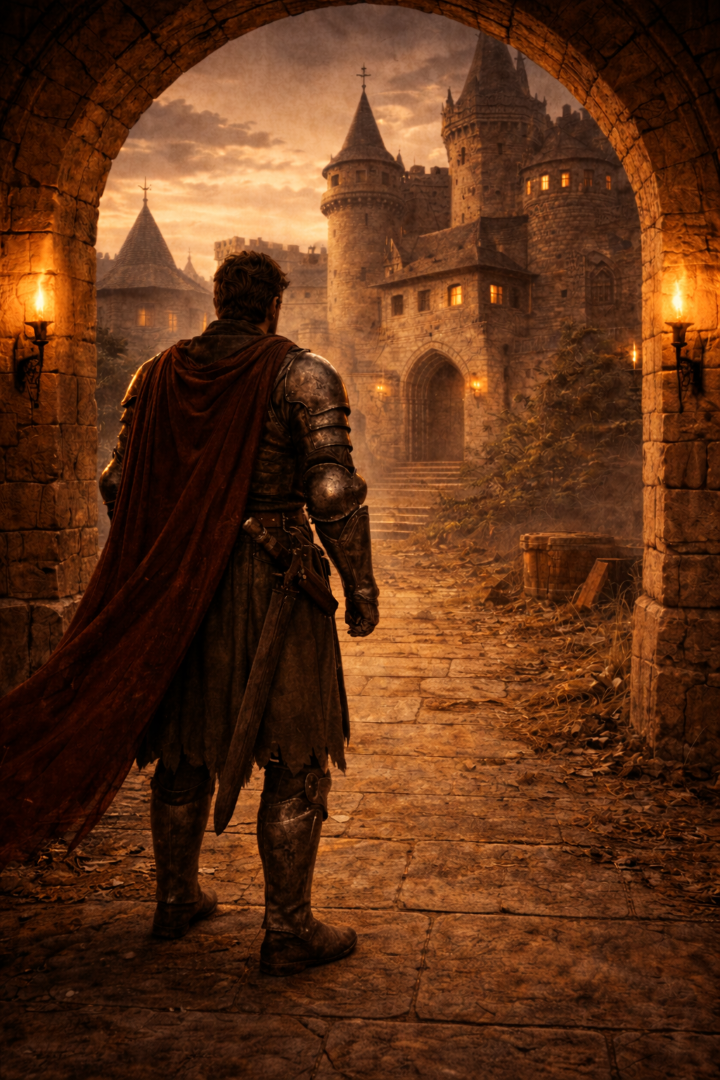
The king stood at the gate longer than he planned to.
The castle felt smaller than memory,
but heavier with what it held.
Every chamber carried ghosts.
Not enemies, but echoes.
Footsteps that once moved together.
A family that no longer entered as one.
For many moments, the king wept.
The quiet solitude adding to the tears.
Enough to let the truth pass through stone and bone alike.
Months of exile folded inward
and settled on the floor at his feet.
Then he rose,
and he worked.
He opened windows sealed by absence.
Pulled down webs spun by waiting.
He lifted objects that once belonged to us
and set them aside without ceremony.
There was no fury in it.
No trial.
Only choice.
The princes joined him in the clearing—
hands small, attention brief,
learning not from words
but from example.
They saw that strength does not rage.
It decides.
Room by room,
the castle remembered its shape
by what the king chose to remove.
When the labor ended,
the halls echoed.
There was less than before—
fewer relics, fewer illusions, fewer demands.
Only memory remained,
and even that had softened,
edges blurred by time.
But in the emptiness,
something unexpected took root.
Space.
Not loss.
Possibility.
For the first time, the castle did not ask him
to rule as he once had.
It did not require performance or permission.
It did not wait to be approved.
It simply stood,
ready to be governed differently.
This was not the restoration of an old kingdom.
It was the founding of a new one.
And for the first time since leaving,
the king understood:
He was no longer returning to what had been.
He was beginning to build
what could finally be his own.